Author: Nox

  • Fix Your Face

    Whether we admit it or not, we often care deeply about how we present ourselves and what others think of our appearance. The principals of what is deemed attractive or not changes periodically, but it’s often common that we fall victim in trying to participate in the trends of adapting to fit someone else’s standards.

    While discussing Ancient Greek statues (or moreso the Roman copies of them) in class, we looked at the different features the statues had, and we noticed that a lot of the earlier statues had a very generic face. We came to the conclusion that there was some sort of beauty standard that even influenced the art that they were producing at the time. I wanted to analyze more deeply as to what this could mean about the ancient beauty standards, and where they could’ve started.

    Rinse and Repeat…?

    Looking at a lot of the Greek statues, it makes you wonder if all these sculptors were getting the same model to pose for them. During our discussions in class, we noticed that there were a ton of sculptures that had the same face and build. These features were mainly used on the less detailed pieces (note: even the “less detailed” statues are still pretty detailed), so it begs the question of if it was just for convenience of copying another artist on aspects to focus on other features, or was this the result of and underlying beauty standard.

    When looking back, it becomes clear that there are some societal standards that the Greeks were conveying through their finished pieces. Some of the more prominent ones were certain facial features, as well as an athletic build for men. They also didn’t depict a lot of the women in the nude, but most of their pieces of men were.

    While not particularly super forced, these features being used constantly was a reminder to the viewers that this was what the “perfect image” of a body was. By not diversatizing the features, it gives the impression of how one should look rather than being okay with what features they do have. This also goes for the things that they’re depicted doing as well. All of the women were depicted being very docile, while the men were either stoic or in more athletic poses.
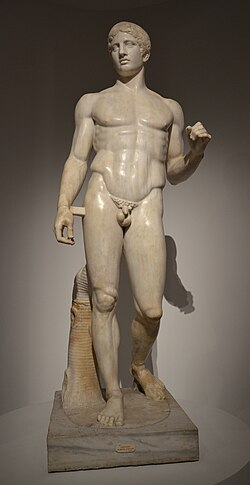
    Doryphoros by Polykleitos

    Using the image above as just an example, we can see the generic features used in most of the early Greek sculptures. While time progressed and they started using more diverse faces, these this remain the dominant population.

    “You Should Totally Use This, It’ll Make You Look Better!”

    All of us, myself included, have been influenced by some sort of beauty standard or product at least once in our lives. Whether we like to admit it or not, that’s just how the world works. While they depicted theirs through bronze or marble, we depict our beauty through photos and videos. Our society still uses beauty standards to control how people look, and while ours has more features that are considered attractive, it’s still the same system. We indulge in makeup, serums, and even weightloss methods to make ourselves the best image possible.

    While it’s been modified over centuries, beauty standards stem from ancient roots that still affect us today. We still are in the hold of knowing we are always being perceived by someone else, and if we think that it’s in a negative way, then it should get fixed to common standard as soon as possible. Once people are allowed to be comfortable in their own skin without needing to change it to cater to others is when we are a free society.
  • The Life After Death

    It’s been a human wonder to see what happens after death. There have been many scientists and other (not-so-qualified) people trying different methods to see what the afterlife is like and come back to tell the tale. There are many iterations of what death looks and feels like, with the eternal light shining down on you, or maybe the pitch darkness engulfing your sight. Throughout time, these different perspectives of the afterlife have changed, but one thing has stayed the same: the care for our dead.  

    Ancient Egypt is well known for the pyramids, hieroglyphs, and, of course, the mummies. The grandiose tombs for their well-loved pharaohs show that they wanted their bodies to be well cared for. While the hierarchy may have manipulated those below them to be given so many valuables for their tomb, you can still tell that there was a huge respect for them just by the way the tombs went long without being touched. We still do this; while it’s not recognized, we still bury our relatives in their best outfits, with pictures of their family, made up to be presented, and sometimes with other belongings. I say we as in the overall cultural expectation in the U.S.A. Everyone’s personal beliefs about death are different and rooted in the culture that they grow up with, so I can’t generalize every modern funeral that’s happened on Earth, but in the country of the U.S., a lot of the funeral procedures are the same, to an extent.

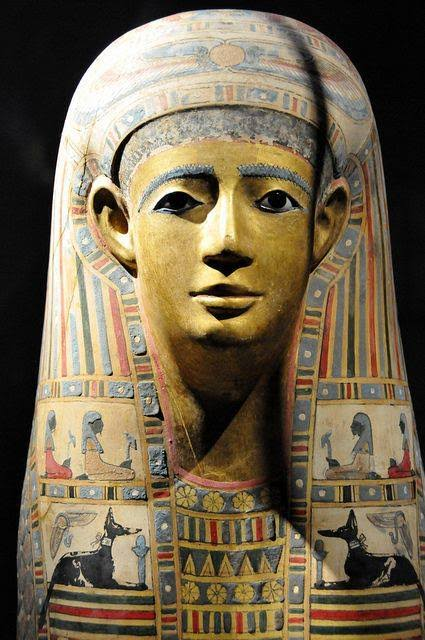
    Funerary Mask, Boston’s Museum Of Fine Arts

    We <3 The Dead

    So, what am I getting at? Why have I just written two paragraphs’ worth of text to say, “We put value in our dead, just like the Egyptians”? It’s simple; we still hold these ancient values true, even if it’s from a culture most of us aren’t connected to. There’s a saying that is thrown around a lot in the social work field: “The U.S. is a melting pot of culture”. While I would personally argue that we’re more of a stew, the point still stands. As a society, we learn from other cultures and incorporate aspects of them into our own. It’s why we celebrate Christmas, even if you aren’t religious. This also goes for any cultures we see outside of the U.S., that might’ve been brought back with us after a travel around the world.  

    It’s hard to pinpoint where the idea of burying people with their belongings came from, but it was most likely rooted the Egyptian religious belief about the afterlife. As we discussed in class, they were buried with anything they might need in the afterlife, which meant food, weapons, and of course, their wealth. Not to restate it, but it’s common for people to be buried with anything that meant a lot to them, so photos, pieces of jewelry, and clothes that they liked. 

    I’d like to bring up the fact that the first instance of mass embalming in the U.S. was created to bring back soldiers from the Civil War to be buried back in their respective towns. (Gupton-Jones College of Funeral Service, 2025). Before then, the practice of corpse preservation was purely on a family-known basis, with each family having their own personal coroner. The need to bring back these people to have the rightfully buried where they lived proves that we have respect and love for our ancestors. We still have the same mindset from before people started recording history. 

    Sarcophagus Of Kheper-Re, Boston’s Museum Of Fine Arts


    I’m Feeling So Exposed Right Now…

    I’d also like to highlight our discussion in class about whether mummies should be in art museums. It’s a hard topic to go around, just because we do see the sarcophagus to be some form of art. However, from a moral standpoint, it doesn’t seem right. I’ll put it into perspective: imagine, for this scenario, you are dead, and your ghost could see what is happening to your body. Now imagine if you were put on display, with no warning or permissions granted, to the possibility of thousands of people. Personally, I’d feel a little bit exposed. While I know most of the mummy exhibitions are primarily for the sarcophagus, and the actual bodies aren’t shown, it’s still a very personal thing. Sarcophagi were specifically tailored, making them a 1 of 1. If we could talk to people of the past and ask their opinion, I’d think that they wouldn’t be privy to the idea. I suppose it’s just opinion, as fellow classmates stated that they felt the most connected with the mummies due to it being once a living being. 

    Another thought is that while we view their funerary items to be art with the intent to be viewed, it is just a religious tool for them. We’ve discussed that their art wasn’t meant to be seen and admired, but more so tell a story for people passing into the afterlife. These artifacts shouldn’t be displayed so far from their discovery site. We, as in the U.S. again, don’t know much about a culture that isn’t ours, so while we do have some information about these pieces, Egypt would know a lot more about the pieces that are from their own country. If we returned the mummies to their original locations, it would do them more justice. 

    Conclusion

    Overall, I believe that we still hold the ancient tradition of respecting our relatives, even after death. We hold so much respect for them that we still believe in burying them with their valuables, taking the tradition from the ancient Egyptians. While sarcophagi and other ancient Egyptian artifacts are insanely interesting to look at, we should respect the culture it reflects and return the mummies to Egypt, so the bodies may rest where they were meant to. 

    Reference

    Gupton-Jones College Of Funeral Service. (2025). A Closer Look Into Embalming: History And Modern Techniques. Pierce Colleges Of Funeral Service. https://gupton-jones.edu/a-closer-look-at-embalming-history-and-modern-techniques/

  • Writing On The Wall

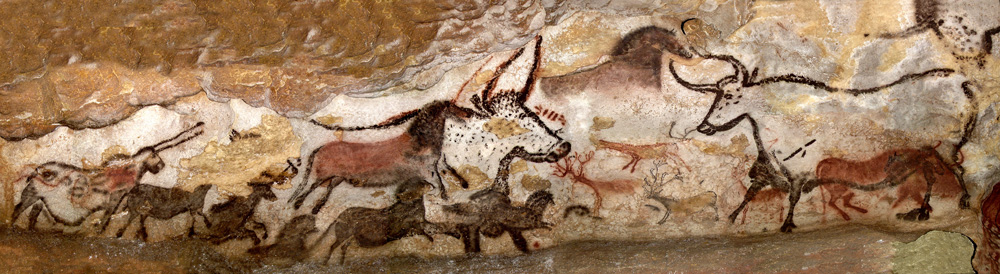
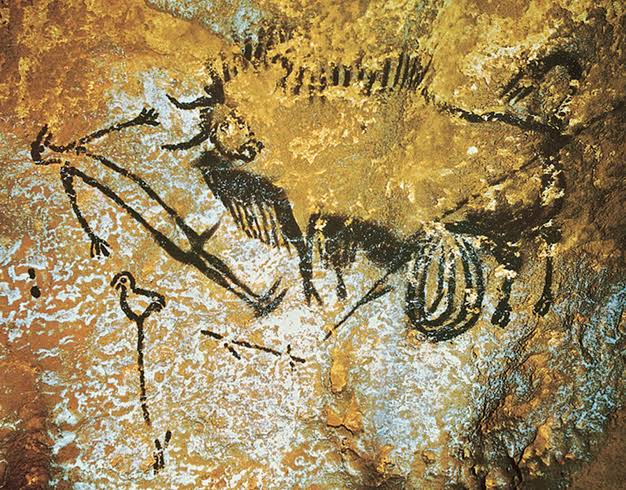
    It’s hard to write about something that we don’t know or understand. While this seems obvious, we try to do it all the time. We, as a society or community, try to explain things that we don’t understand, to rationalize it in a way that makes sense to us. Of course this leads to us making assumptions about others that could be entirely false depending on the topic. I wanted to focus my first post on a specific type of art that has almost no information about it besides where it is and how it came to be. I’m talking about ancient cave paintings, more specifically I will be focusing on the “Hall Of Bulls” and “Disemboweled Bison & Bird-Headed Human Figure” in Lascaux, France.

    Hall Of Running Bulls, Lascaux (All Not Depicted)

    “I Want To Help!”

    For most people, there is an urge to help others. It’s been ingrained into our brains since elementary school that helping others is important and the right thing to do. With some of the ancient caves in France, it has been speculated that the drawings were made as warnings to others, or used something along the lines of animal identification. The “Hall Of Running Bulls” displays dozens of drawings of bulls, as well as other animals, across the walls and ceiling of the cave. I think it’s very probable that these paintings were used for that reason. I also like the idea of using art to help yourself, as in stress-relief or memory recall.

    “It Doesn’t Have A Purpose, I Just Like Looking At It.”

    A topic we’ve discussed in class that comes up quite frequently is the idea of art for pleasure. It’s not super known what prehistoric humans (or whatever term they’ve been given) would do besides hunt and reproduce. The idea of ancient art pieces being used as decoration wasn’t that popular due to the fact that art historians thought everything needed a survival purpose. They’ve found weapons, tools, and other things that were key to the survival of these beings, but when presented with something that isn’t blaringly obvious as to how it kept these prehistoric humans alive, they’re stumped.

    Switching the perspective for a little bit to the social work side, being mentally sound is seen as a key to survival in the modern world we live in, so why do we think it wasn’t the same for them? What makes them so different from us, besides the fact that we have more advanced technology? The idea of using the art to relieve stress isn’t so crazy when you think of as to why we make art.

    One thing that one of the readings, written by Mary Beth Looney, brought up was that the drawings seemed to be a serious thing for them, and it even suggested that it could be ritualistic. “…It seems that the pure process of drawing and repetitive re-drawing held serious (perhaps ritual) significance for the makers” (Looney). She also discussed Henri Brevil’s theory about “hunting magic”, which claimed that they would draw animals to “overpower” them and have a successful hunt.

    Disemboweled Bison And Bird-Headed Human Figure

    If I could add a theory into the mix, I would say that it was used as a way of storytelling. Depicted above is the “Disemboweled Bison And Bird-Headed Human Figure” which has stumped historians as to why it was made. Going back to the topic of stress-relief, most people would consider hanging out with friends one of their biggest stress-relievers. I could imagine a family or group of ancient humans gathering to discuss their day or even brag about what they caught during a hunt. Maybe these pictures were just made to help tell a story to others.

    Main Takeaway

    Not everything needs a serious purpose. Some things from the ancient world could just be used for fun, and it doesn’t need a serious purpose. Ancient humans aren’t as different from us as they make it seem, and they also need some time off from their stressful lives.

    Source

    Looney, M. Lascaux. Khan Academy. https://www.khanacademy.org/humanities/ap-art-history/global-prehistory-ap/paleolithic-mesolithic-neolithic-apah/a/lascaux